Children's Speech and Language Therapy
About us
What is speech and language therapy?
Lots of children and young people have difficulties with their communication, or with eating and drinking. Speech and language therapy can help them.
From January 2027, the Wigan Speech and Language Therapy service will change how it supports school‑aged children with speech, language and communication needs.
This change is part of a Greater Manchester transformation project based on The Balanced System® (Gascoigne, 2011). This approach focuses on improving outcomes for children by joining services together and making support more effective. It has been developed in line with national policy, legislation and professional guidance. It also responds to challenges identified in the Bercow Review (DCSF, 2008) and the Better Communication Action Plan (2011).
As part of this new approach, every primary and specialist school will have a named speech and language therapist linked to them. This therapist will work closely with school staff to help create classrooms that support speech and language development.
They will help staff spot any difficulties early and make sure the right support is in place across the whole school. The therapist will offer advice, help set up whole‑class and targeted support, and work directly with children who need more specialist intervention.
See "How We Work" below for an information video.
- Communication
Some children may be late to develop their communication skills. They may find it hard to understand speech, or to express themselves clearly. With support, they will catch up with other children of their age. Speech and language therapy works with parents, nursery and other supporting staff to develop strategies so that they can help the child catch up.
Other children may have longer lasting difficulties with communication. One aspect of communication might be particularly challenging for them. For example children may struggle with:
- Understanding what is said
- Finding and combining words to give a message
- Speaking clearly: others may not understand
- Speaking fluently: children may get stuck on words
- Understanding social rules and interactions
- The quality of their voice
We support children and young people aged 0-16 (0-19 if attending special schools) with an identified or suspected speech, language and communication need and those with eating and drinking disorders.
- Eating and Drinking
Some children have difficulties with managing food and drink. They need specialist assessment and advice from our dysphagia service.
General advice on weaning, picky eating or mealtime behavioural issues is provided by your Health Visitor.
The Dysphagia Service is available for children who have more complex eating and drinking needs.
Our service focuses on:
- Supporting children and young people to maximise their ability to communicate and participate in education, at home and in their community.
- Supporting children and young people to reach their full potential.
- Enabling the child/young person and/or their parents/carers to confidently self-manage their communication and/or eating and drinking
You can download a dysphagia referral form here.
- What We Don't Do
- Elocution and working on accents.
- Dyslexia and helping children to read and write.
- Teaching children how to speak English as an additional language (EAL).
- Weaning and “fussy” eating.
- What We Have Specialist Services For
- Hearing Impairment
- Complex Early Years
- Autistic Spectrum Condition (ASC)
- Dysfluency (stammering)
- AAC (Alternative and Augmentative Communication)
- SEN in mainstream and specialist settings
- Dysphagia (Eating and Drinking)
- How We Work
From January 2027, the Wigan Speech and Language Therapy service will change how it supports school‑aged children with speech, language and communication needs.
This change is part of a Greater Manchester transformation project based on The Balanced System® (Gascoigne, 2011). This approach focuses on improving outcomes for children by joining services together and making support more effective. It has been developed in line with national policy, legislation and professional guidance. It also responds to challenges identified in the Bercow Review (DCSF, 2008) and the Better Communication Action Plan (2011).
As part of this new approach, every primary and specialist school will have a named speech and language therapist linked to them. This therapist will work closely with school staff to help create classrooms that support speech and language development.
They will help staff spot any difficulties early and make sure the right support is in place across the whole school. The therapist will offer advice, help set up whole‑class and targeted support, and work directly with children who need more specialist intervention.
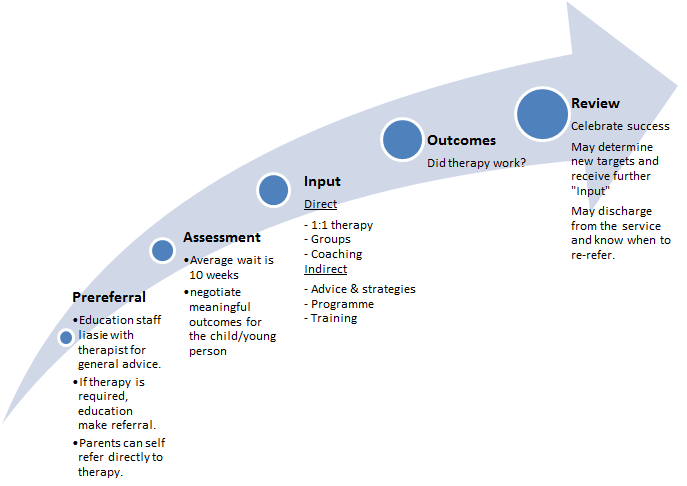
- What To Expect
- Where We Work
- We offer services in a range of locations including community clinics, mainstream and special schools, other venues in the community and in the patient’s home as appropriate to the child’s and family’s needs.
- The majority of buildings we use are accessible e.g. they have wheelchair access – however if you have accessibility needs, please contact us before your appointment so that we can support those needs.